Holistic Education Resources
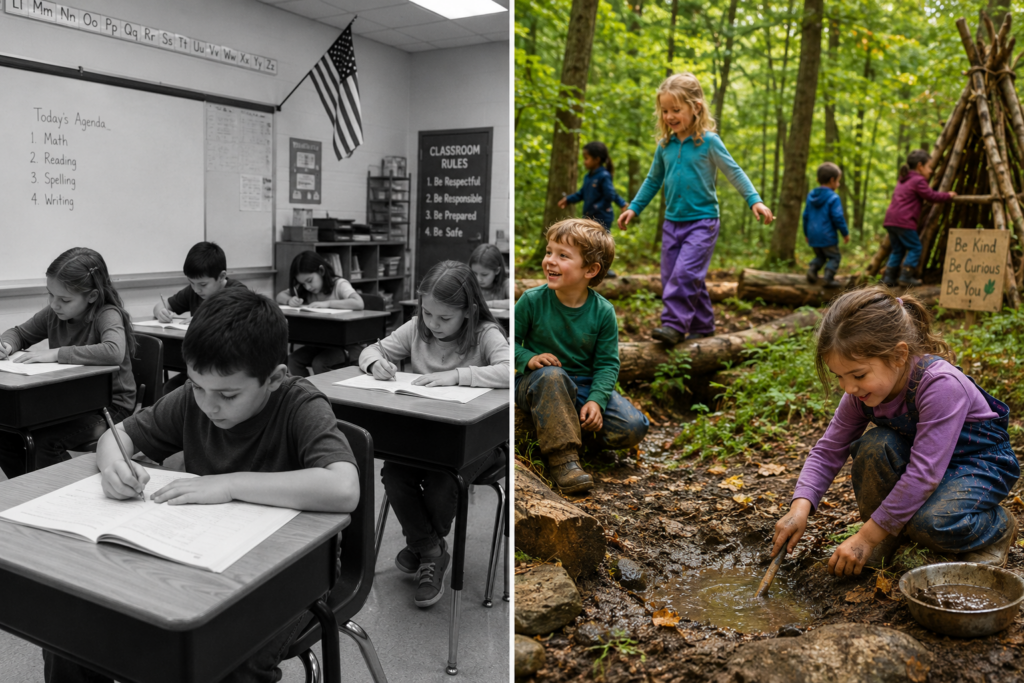
Education and Learning. While modern educational research has continued to gather relevant data concerning how learning happens and comment on best practices, the conventional educational model (public school in the U.S.) has become increasingly contradictory to the advancing knowledge base. Here is a quick comparison of educational elements between the public compulsory model as rendered in the U.S. and popular alternative methodologies. Note: private schools in general are not considered a separate category because they, in large part, lean more or less toward one of these models.
See Comparison
Holistic Rubrics & Assessments
Learning Cycles
Learning is rarely ‘one and done’. It is more often ‘use it or lose it’. When we plant our vegetables for a season, are we finished? ‘Been there done that’? What about next Spring? and the next . . ? When Learning is seen as cyclical as the seasons, we expect and design to revisit and refine. By intentionally using cyclical learning models, we can be more accountable to holistic development.
Mesoamerican Learning Cycle
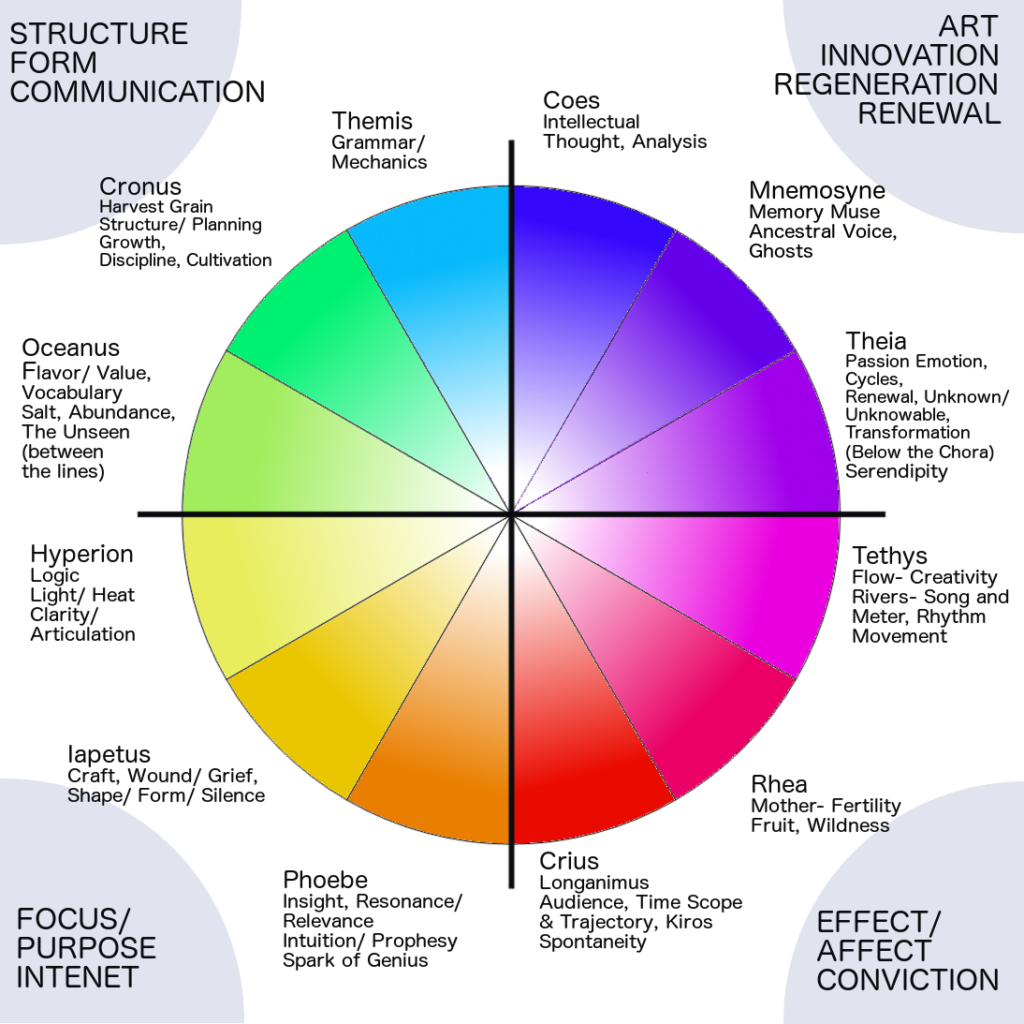
Holistic Writing Rubric
This rubric evaluates writing as a whole through 12 symbolic lenses that blend craft, purpose, audience, imagination, structure, and language. In plain terms, it asks whether the piece is clear, well-shaped, insightful, audience-aware, original, rhythmically smooth, bold, memorable, thoughtfully analyzed, grammatically sound, well-structured, and rich in vocabulary.
Focus
- Purpose and clarity: Does the writing clearly communicate its intent and do so logically?
- Craft and form: Is the piece shaped skillfully, with structure that supports the message?
- Insight and depth: Does it show strong observation, intuitive conclusions, and meaningful analysis?
- Audience and resonance: Does it speak to readers now and beyond the immediate moment?
- Voice and vitality: Does it feel alive, fertile, risky, and original rather than flat or routine?
In Practice
Each category uses a tiered scale from strong performance to weaker performance, with comments for feedback. The categories overlap a lot, so the rubric rewards writing that is not just technically correct, but also expressive, thoughtful, and intentional. It combines traditional concerns like grammar and structure with more imaginative ideas like ancestral voice, cosmic resonance, and emotional risk.
View Complete Rubric